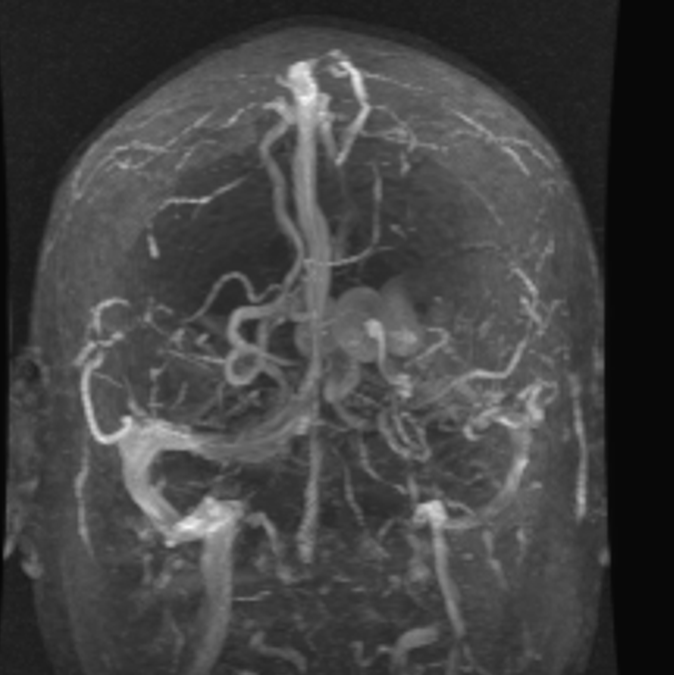
Let us now turn our attention to brain tumors. My aim here shall be to discuss how brain tumors present in different age-groups, the most common type of tumors in different age groups, how brain tumors are diagnosed ( what work-up doctors do in the hospital) and finally touch on the management of different types of brain tumors.
Brain tumors can present in any age-group right from the neonatal and pediatric age-groups till the adult ages. Different types of brain tumors are seen in different age-groups.
First what exactly is a brain tumor? A tumor refers to a group of cells which can multiply and proliferate relentlessly. Normally the growth of cells in the body occurs in a controlled and programmed fashion. At times for reason which are still been elucidated this control is lost and a group of cells in a tissue/organ may start to multiply in a haphazard fashion. When this occurs in the brain it leads to a brain tumor. Different types of brain tumors may arise depending upon which cell in the brain starts to multiply. Tumors can arise from neurons in the brain, the cells of the lining of the brain (meninges) and from the supporting cells in the brain (glial cells),
Each of these tumor type has its own natural history meaning the age when it presents (pediatric Vs adult), where it arises in the brain (location) and its aggressiveness ( how quickly it grows in the brain, how much does it spread, how much it invades the surrounding healthy brain tissue). As you can now imagine each of these tumors is thus treated in its own unique way--some with anti-tumor (chemotherapy) drugs, some solely by surgery and others by radiation therapy ( not all tumors are sensitive to radiation). Some require a combination of the above mentioned modalities: surgery, chemotherapy and radiotherapy.
Tumors are also classified in another way: benign Vs malignant. What does it mean when your doctor tells you " you have a benign brain tumor". When we as doctors refer to a tumor as benign we mean that its natural history is one of slow growth (the tumor may either never increase in size or may grow only over years), its invasive potential is very low ( the tumor does not invade into surrounding healthy brain tissue) and it is not aggressive. Benign brain tumors like meningiomas may not warrant any treatment, they may be discovered incidentally when you have an imaging study (MRI or CT scan) for some reason and your doctor may decide not to do anything apart from keeping you under observation and periodically repeating your imaging study.
There is a catch to this though. Even though your tumor may be benign it might be in a place (location in the brain) where it leads to some deficits. If it is near your brain stem and cerebellum it may press on your auditory nerve and lead to loss of hearing, some benign brain tumors can cause seizures. So the treatment has to be tailored to each individual case. Some benign brain tumors may warrant treatment.
Its Friday, lets take a short break. When I come back I shall discuss how tumors present ( what are the warning signs that someone has a brain tumor).
Personal Regards,
Dr. S
So lets now talk a little about how brain tumors present clinically. Brain tumors may present in a variety of ways. They may be completely silent and discovered only accidentally. Let me give you an example. Person is asymptomatic, he has a minor fall and doctor orders a CT scan or MRI and a brain tumor is found incidentally. Maybe the same tumor would have presented clinically a little while later after having enlarged in size.
Common ways that brain tumors present are as follows:
1) Headache: there is no particular pattern of headache which is specific for a brain tumor. No brain tumor is found in the majority of patients who are worked up for headaches. Most of the headaches are due to migraines, tension headaches and other common causes of headaches. But new onset headache in a middle aged person, headache which wakes one up from sleep or occurs in the morning on awakening, headache with nausea and projectile vomiting are warning signs that something might be brewing up. Also change in the character or frequency of headache in a person who has had headaches in the past makes doctor think about the possibility of brain tumor.
2) Seizures: frequently brain tumors may present with seizures. Thus whenever a person especially middle aged or elderly presents with an unprovoked seizure, a neuroimaging study is warranted to rule out the possibility of brain tumor.
3) Focal neurological signs: let me explain what I mean by that. New appearance of neurological signs like weakness or numbness in an arm or leg, unsteadiness of gait, loss of vision in one part of the visual field, difficulty with speech or weakness of one side of face all warrant work up for the possibility of brain tumor under the correct circumstances.
4) A brain tumor may be discovered as a work up of malignancy somewhere else in the body. Let me explain. Someone has lung cancer, as a work up a MRI scan of the brain is done and metastatic spread of cancer is noted to the brain (metastatic tumor: the tumor did not arise in the brain, rather spread to the brain from the primary source, in the above example it is the lung).
Next we shall turn our attention to the different kinds of brain tumors.
Personal Regards,
Dr. S
Lets now talk about the different kinds of brain tumors. As I stated earlier different kinds of tumors can arise in the brain ( depending upon the cell of origin). The most common primary brain tumors are those that arise from t glial cells. These tumors include astrocytomas.
Astrocytomas are graded as per a classification developed by the World Heath Organization (WHO). On the basis of the WHO classificiation these tumors are graded from I to IV.
Grade I and II astrocytomas are also called low grade astrocytomas ( what do you mean by low grade? Well the tumor is not so malignant, it lacks the invasive character of a high grade tumor, grows more slowly and increases in size over years)
Grade III and IV astrocytomas are also called high grade astrocytomas. (these tumors are more malignant, invasive, increase in size over months and thus life expectancy is shorter)
Grade IV astrocytoma is more commonly referred to as Glioblastoma multiforme or rather as GBM. This tumor has a poor prognosis and a short life expectancy.
There are other types of brain tumors. I shall list a few of them out here and comment on them as we go along.
1) Meningiomas
2) Acoustic Neuromas/ vestibular schwannoma
3) Ependymomas
4) Oligodendrogliomas
5) Optic nerve gliomas
6) Craniopharyngiomas
7) Germ cell tumors.
8) Pineal glad tumors
9) Pituitary gland tumor-pituitary microadenoma and macroadenomas
10) Medulloblastoma
11) Neuroblastoma
12) central neurocytoma
13) Ganglioglioma
14) Retinoblastoma
Next we shall go over some aspects of diagnosis and management of brain tumors.
I hope you all are enjoying this Saturday morning.
Personal Regards,
Dr. S